

Key Takeaways
- Tired eyes from stress or lack of sleep often lead to double vision.
- Cataracts can cloud your lens and create 2 separate images.
- Frequent headaches or pain around your eyes require an eye exam.
- Special prism glasses or an updated prescription can help correct your sight.
- Routine visits to an eye doctor in Orangeville help protect your family’s vision.
You might look at a street sign and suddenly see 2 blurry posts instead of one. Seeing double can feel disorienting when you try to read a book or drive your car. Our team at Headwaters Optometry knows this visual shift disrupts your whole day and can make simple tasks difficult.
Many people experience this symptom at some point in their lives. The most common cause of double vision depends on the type: astigmatism (a refractive error) is the leading cause when it occurs in only one eye, whereas strabismus (eye muscle misalignment) is the primary cause when both eyes are open. Other times, this issue stems from tired eye muscles or an underlying health condition. A quick visit to your local clinic can help you find clear answers and helpful treatments.
Causes of Double Vision
Common Everyday Causes
Daily habits can often lead to temporary shifts in your vision. For instance, spending long hours at a screen can fatigue your eye muscles, leading to computer vision syndrome, while stress and lack of sleep make it much harder for your eyes to stay in focus. Other factors, like changes in blood sugar, certain medications, or simply needing an updated prescription, can also play a role in how clearly you see.
Medical and Structural Causes
Sometimes, double vision is caused by structural changes within the eye or the way the eyes work together. For older adults, cataracts are a common culprit; this condition occurs when the clear lens of the eye becomes cloudy, causing light to split as it enters the pupil. Regular eye exams and specific cataract assessments are the most effective ways to monitor these changes.
Beyond the lens itself, double vision can also stem from misaligned eyes or muscle coordination problems. In some cases, it may even be linked to broader health concerns, such as thyroid conditions or nerve-related issues that affect how the eyes move in tandem.
Signs and Symptoms That Accompany Double Vision
What You Might Feel
Your body often sends physical signals when your eyes are struggling to focus or maintain alignment. This discomfort can manifest as a heavy sensation around the brow bone, which typically points to significant visual strain.
When your eyes are overworked, you might also experience:
- Localized pain in or around the eyes.
- Frequent headaches or a feeling of pressure in the temples.
- Dizziness or a sense of being off-balance, as your brain works harder to process inconsistent visual information.
Red Flags to Watch For
Certain symptoms require quick attention. Sudden changes in your face or speech need an immediate medical evaluation. Addressing these signs early helps you protect your overall health. Seek immediate medical attention if you notice:
- Drooping upper eyelids
- 1 pupil is larger than the other
- Sudden weakness or trouble speaking
How an Optometrist Can Find the Cause
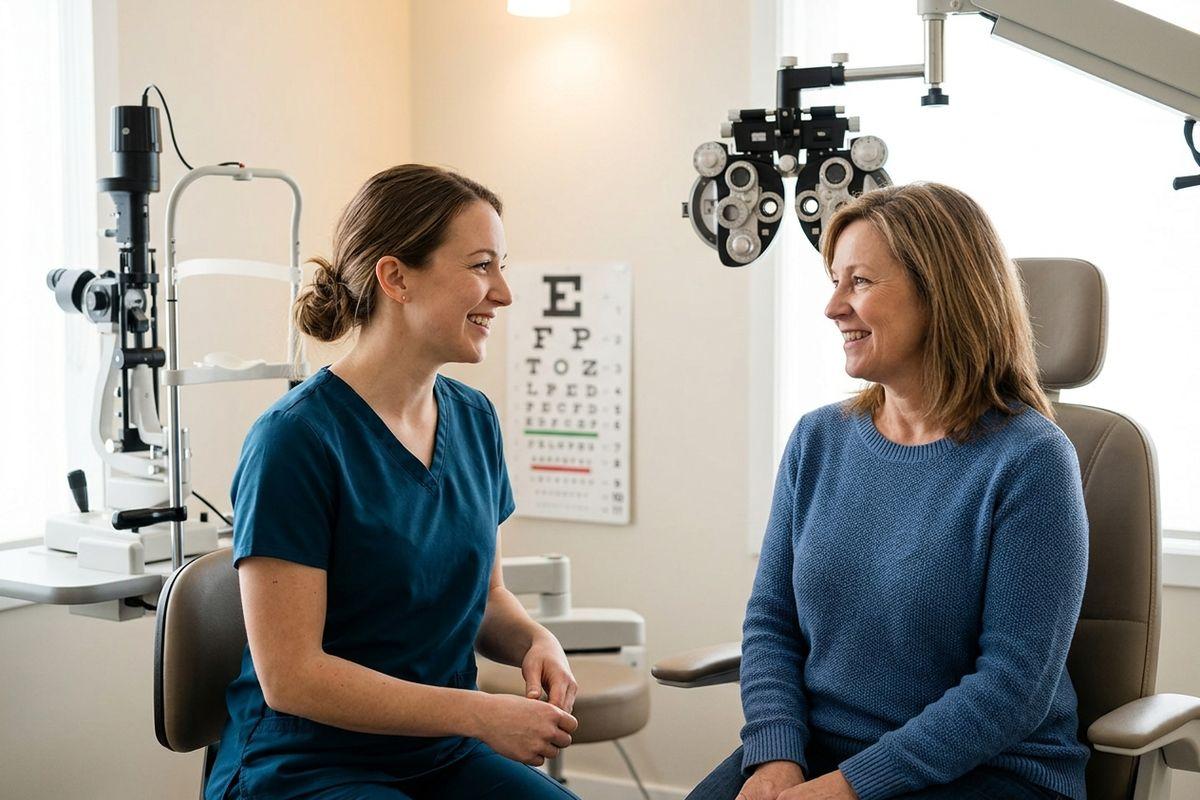
To provide the most thorough evaluation, our team uses modern diagnostic imaging and specialized testing to assess every aspect of your vision. During the exam, you can simply sit back while the eye doctor uses a gentle light to examine the internal structures of the eye, including the retina and the optic nerve.
This comfortable process allows us to monitor how your eye muscles handle various tasks. By testing muscle strength and movement, we can determine exactly how well your eyes work together to create a single, clear image.
Discovery and Diagnosis Steps
A comprehensive eye exam is designed to assess your overall health, as your vision is often connected to your well-being. During your visit, the eye doctor will review your daily habits, health history, and current medications to spot potential links to your visual symptoms. Sharing your family health history is also essential, as it helps our team build a personalized care plan tailored to your needs.
The evaluation includes several functional tests, such as checking how your pupils react to light, to check that your neurological pathways are responding correctly.
Simple Treatments to Help Correct Your Sight
A new pair of glasses often provides the simplest solution for clearing up blurry or overlapping images. By updating your current prescription, we can help your eyes focus more accurately, which is often enough to resolve minor ghosting.
For more complex alignment issues, the eye doctor can add custom prism lenses to your prescription. These specialized lenses work by bending the incoming light before it reaches your eyes, helping align 2 separate images into a single, clear view. In some cases, temporary eye patches may also be recommended to rest a specific eye and reduce strain from competing visual signals.
Long-Term Solutions
In some cases, maintaining visual health requires a more comprehensive, long-term treatment plan. For issues related to coordination, you may be guided through a supervised vision therapy program designed to build muscle strength. These regular exercises are effective because they train the brain and eyes to work together as a more cohesive team.
Beyond therapy, care often involves addressing the underlying health conditions that may be impacting your sight. This approach typically includes consistent eye muscle exercises to improve focus, alongside careful monitoring during follow-up visits to track your progress and adjust your care plan as needed.
Why Regular Eye Care Protects Your Vision
Early detection plays a significant role in managing overall health and maintaining clear sight. By prioritizing regular checkups, you can establish a consistent baseline for your vision year after year. This historical record makes it easier for an eye doctor to identify subtle shifts in your eye health before they develop into more significant visual concerns.
Beyond monitoring for potential issues, these routine visits are the best way to keep your daily prescription accurate and up to date. Proactively building this baseline for your eye health allows for a more personalized approach to care, where small changes are caught and addressed well before they impact your quality of life.
Care for the Whole Family
You rely on your eyesight for almost every task throughout the day. Clear vision helps you read menus at your favourite restaurant and spot friends across the street. Our welcoming team at Headwaters Optometry can help you manage double vision and protect your family’s eyesight. Schedule a comprehensive eye exam today to keep your vision healthy and comfortable for years to come.